
Stakes
Caterpillar operates at global scale, with dispersed teams relying on internal systems to manage sales models, engineering data, and operational workflows. These tools directly impact throughput, decision speed, and execution clarity across regions.
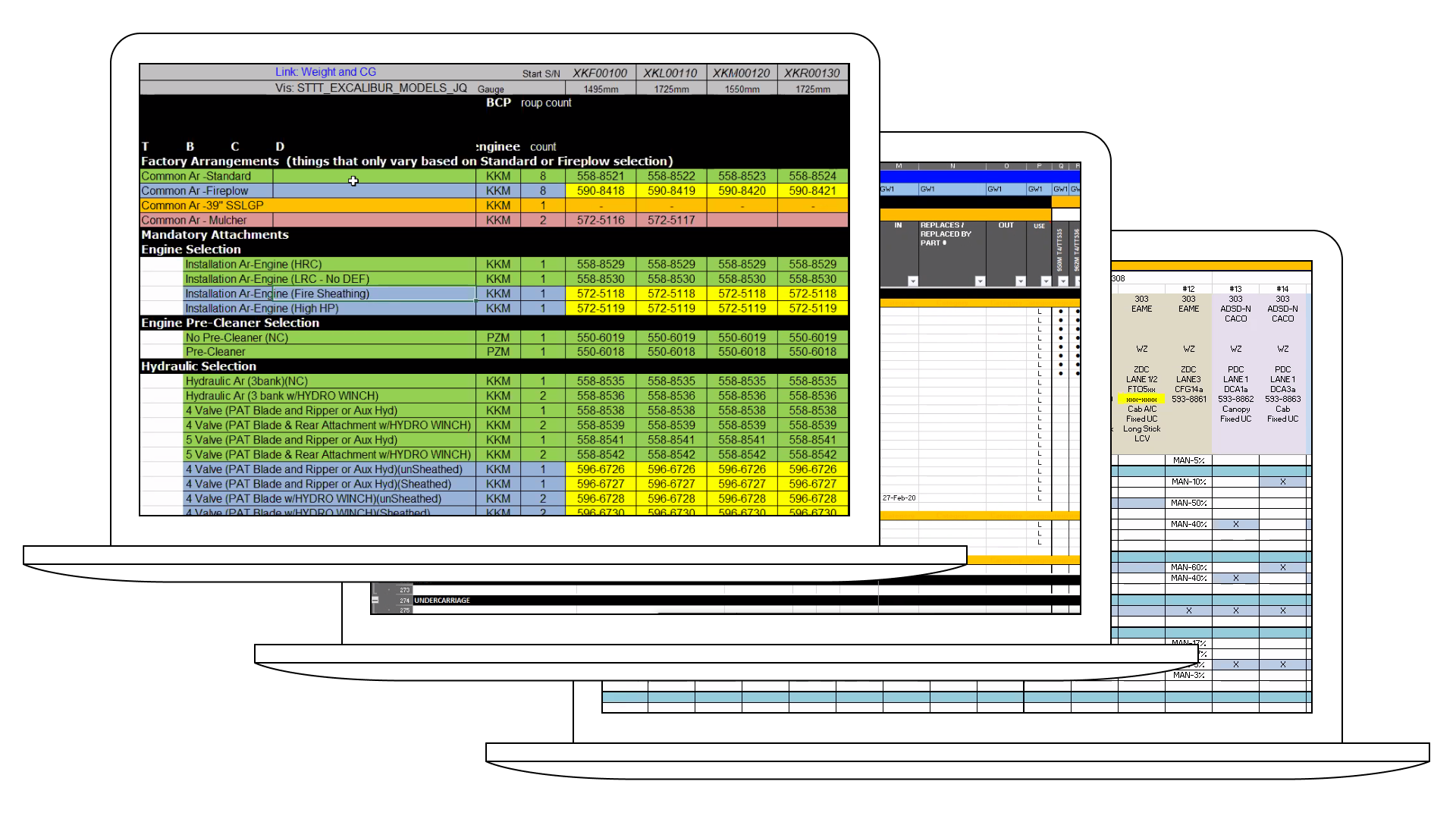
Over time, incremental system additions had created fragmented legacy environments. Interaction patterns were inconsistent. Data representations varied. Workflows overlapped. Teams compensated through workarounds and informal knowledge transfer.
This was not a surface-level UX problem.
It was structural inefficiency embedded inside core enterprise tools.

Opportunity / Risk
The opportunity was to consolidate fragmented systems into a scalable, unified foundation. The risk was executing migration under live production conditions without disrupting throughput or trust.
The Challenge
While legacy fragmentation was creating inefficiency, the deeper challenge surfaced during migration. Teams did not simply disagree about layout or features — they disagreed about how critical enterprise data should be structured and displayed.
Engineering teams required technical depth and granular system visibility. Sales-oriented teams required comparative clarity and rapid model evaluation. Each mental model reflected legitimate operational needs.
The effort required consolidation across legacy systems while preserving global production continuity.
Structural realignment had to occur without disrupting live operations.

My Role
I partnered across product, engineering, and global operational teams to map system dependencies and identify structural inconsistencies slowing execution. My focus was eliminating fragmentation, standardizing interaction patterns, and reducing workflow complexity before layering on enhancements. The transformation was aligned to live production constraints from the start.
Strategic Approach
Modernization was approached as structural consolidation, not visual refresh.
Through interviews, workflow audits, and artifact analysis across global teams, we identified where fragmentation created friction: duplicated steps, inconsistent navigation logic, unclear data ownership, and redundant approvals.
Instead of forcing convergence toward a single rigid representation of enterprise data, we separated architecture from presentation. The underlying data model and interaction patterns were standardized across tools, while configurable views were introduced within controlled guardrails.
This preserved structural consistency while allowing teams to access the depth or abstraction appropriate to their context. Customization was engineered within constraints to prevent the re-emergence of fragmentation.
Workflow simplification preceded capability expansion. Core tasks were reduced in complexity before new features were introduced. Migration was staged deliberately to preserve production continuity.
Adoption followed clarity, not enforcement.
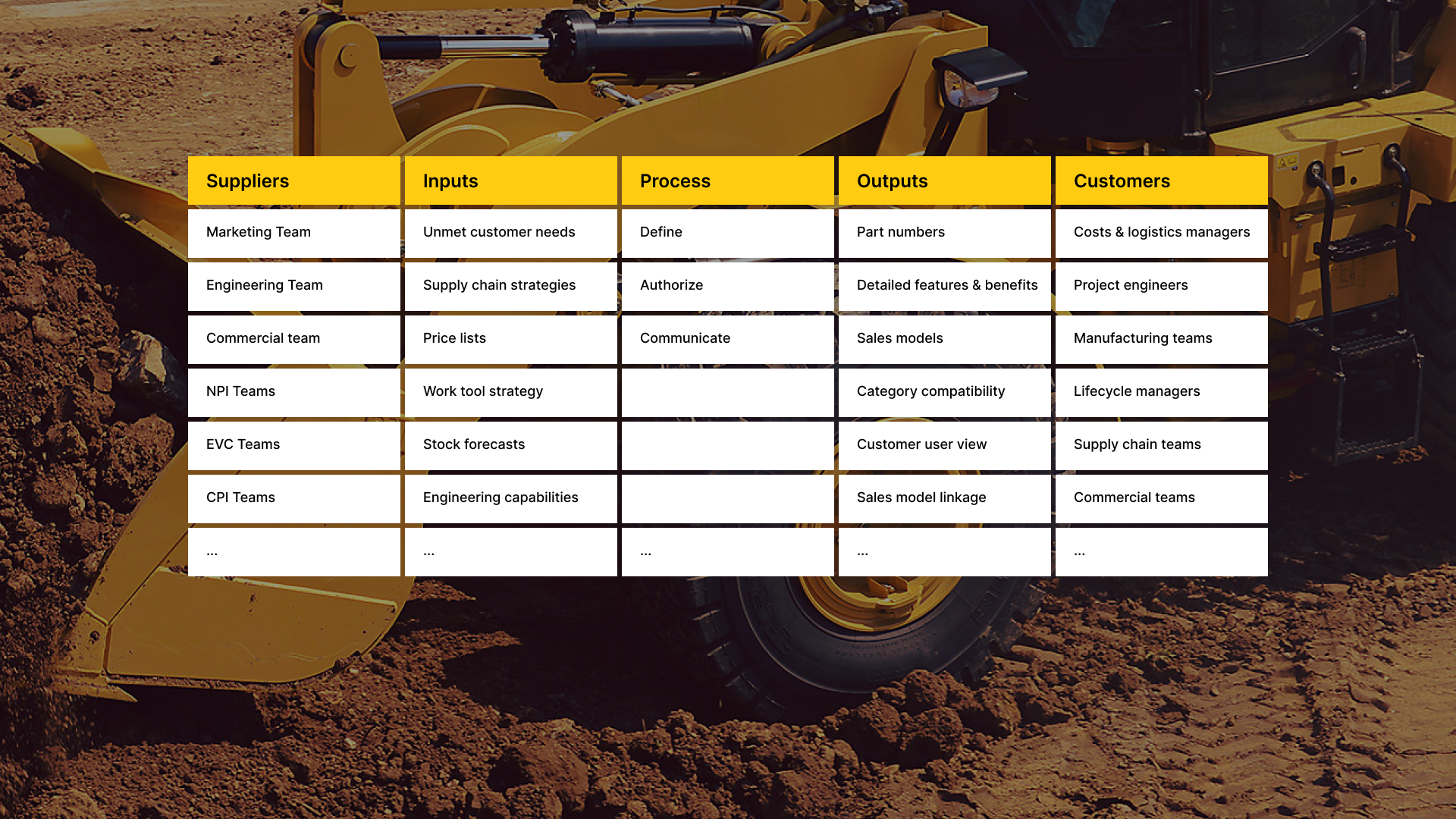
System Mapping: SIPOC Framework
To understand enterprise fragmentation, I mapped the full supplier–input–process–output–customer system to identify dependencies and workflow breakdowns across teams.
Structural Insight
System mapping surfaced representational misalignment across teams. Engineering prioritized depth; sales prioritized comparative clarity. The conflict was architectural, not visual.
Key Decision — Controlled Flexibility Within Guardrails
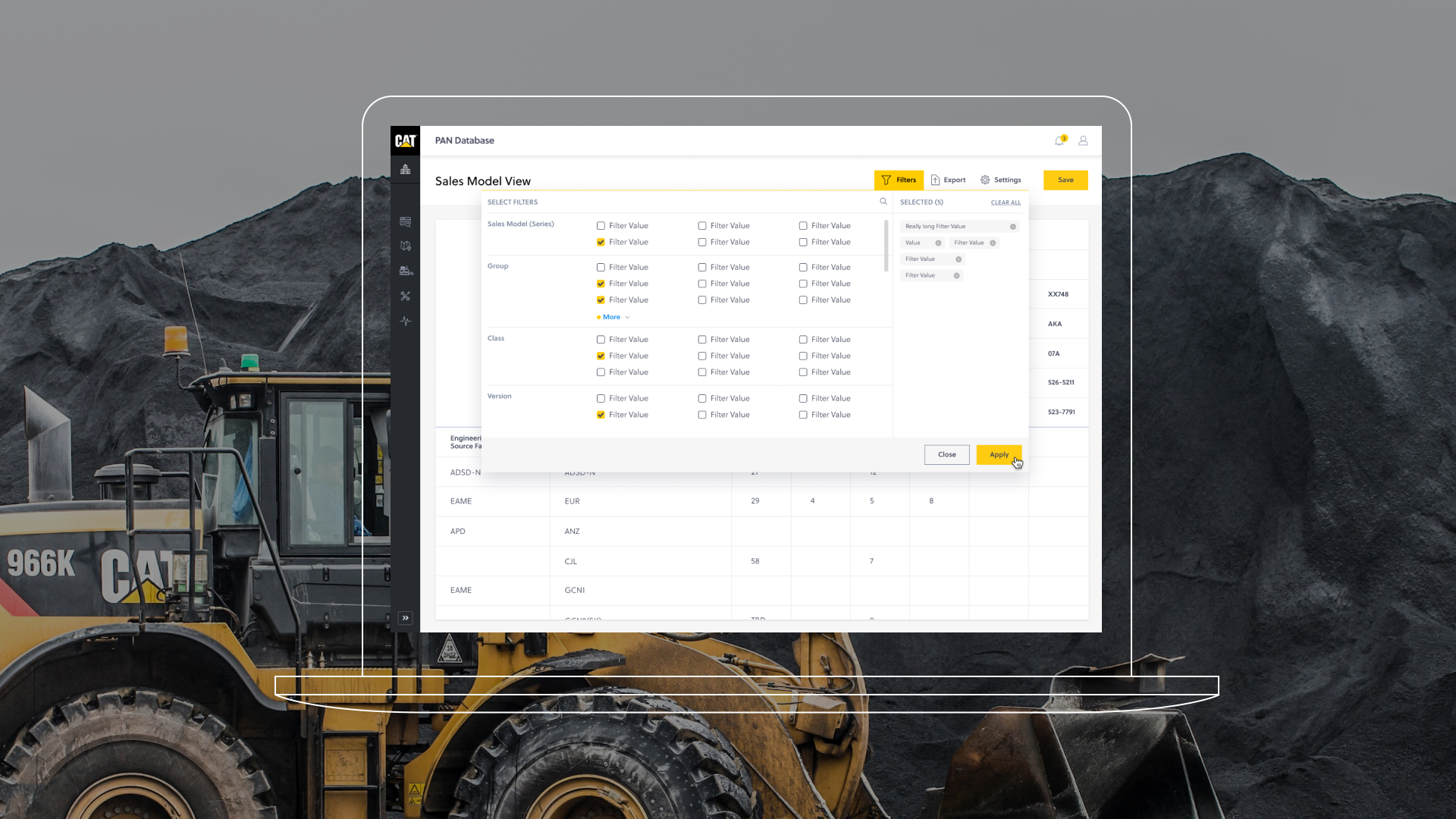
Rather than allowing unrestricted customization, we introduced configurable system views bounded by shared architectural standards.
This resolved representational conflicts between teams without compromising system integrity. Engineering retained necessary depth. Sales retained comparative clarity. Both operated within the same structural framework.
By separating representation from architecture, we eliminated fragmentation while preserving flexibility.
Validation & Synthesis
Migration decisions were validated through structured user sessions, confirming representational flexibility and workflow simplification before system rollout.


Workflow Simplification
With validation confirming representational flexibility, we simplified core workflows, reduced redundant steps, and aligned user journeys across roles.

Information Architecture & Interaction Model
Standardized interaction models were introduced across systems to reduce variability and improve predictability at scale.


System Execution
The modernized system unified navigation logic, standardized interaction patterns, and introduced configurable views within architectural guardrails. Workflow variability decreased and cognitive switching costs were reduced across regions.


Impact
The initiative reduced workflow complexity across systems, eliminated legacy fragmentation, increased global adoption, and established a scalable UX foundation aligned with enterprise standards.
Most importantly, production continuity was preserved throughout migration. Operational throughput was maintained while structural inefficiency was reduced.
Enterprise consolidation was achieved without sacrificing stability.
Strategic Reflection
Enterprise migrations succeed when architecture, interaction patterns, workflows, and adoption are aligned inside a unified system. Reducing operational entropy creates durable leverage.
